5 reasons the Arslanagić Bridge belongs on your list
- An endowment of Mehmed Pasha Sokolović from 1574, one of the finest examples of Ottoman architecture in the region.
- The story of a bridge that was flooded, taken apart and turned down by buyers from around the world, and never sold.
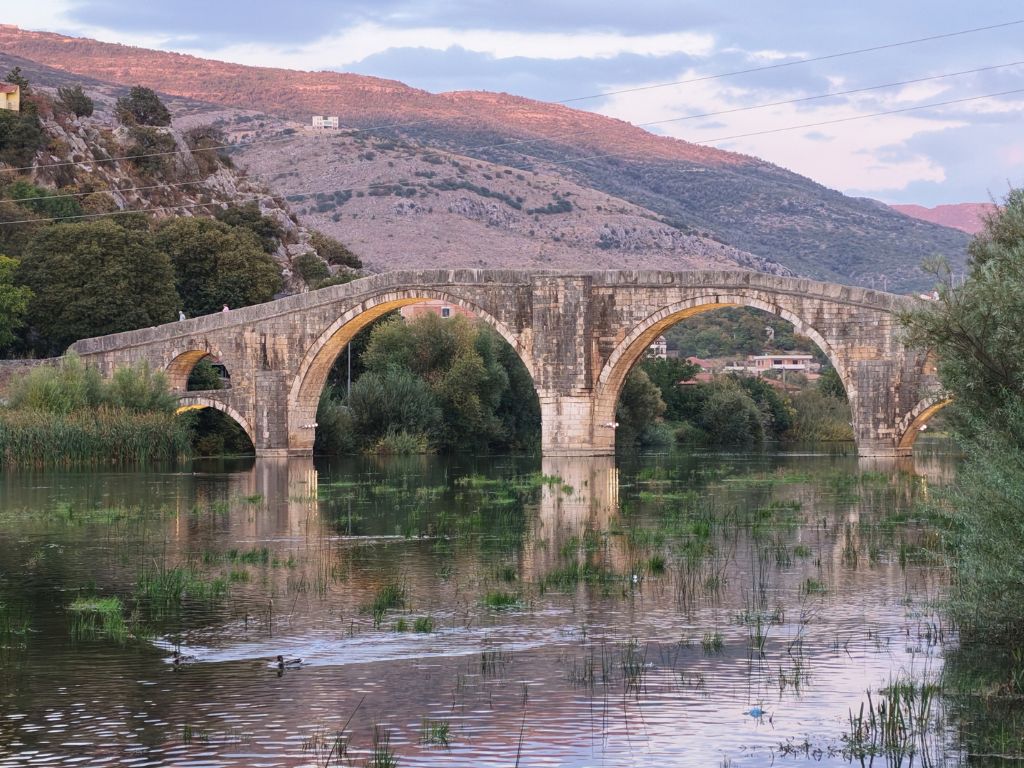
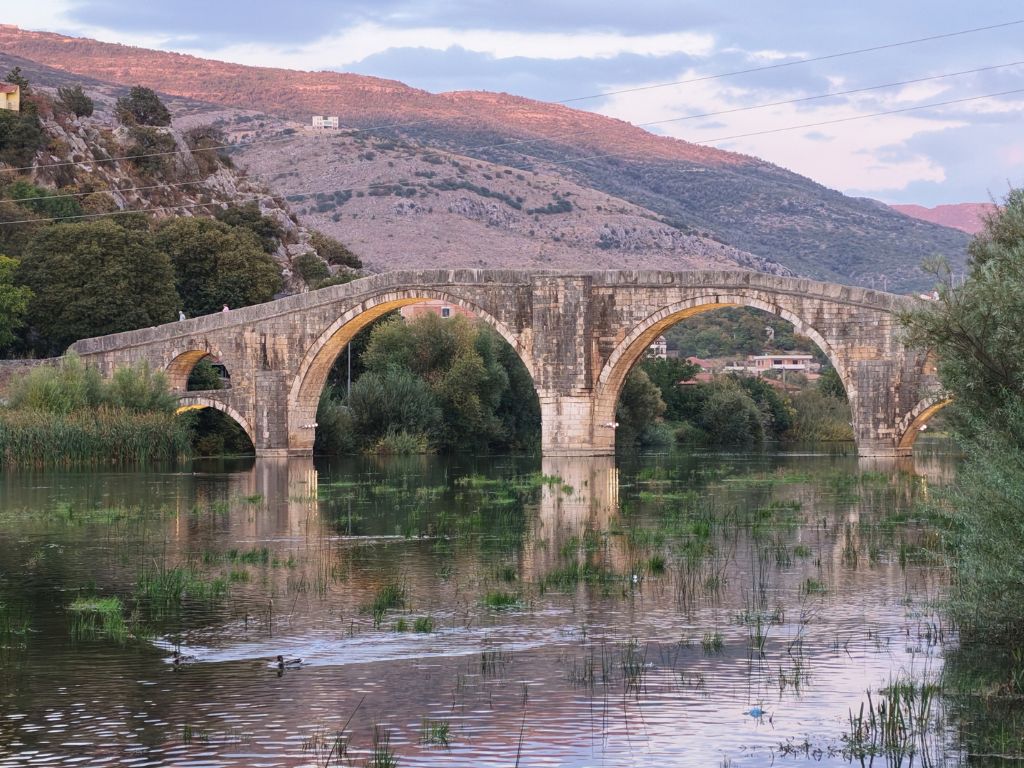
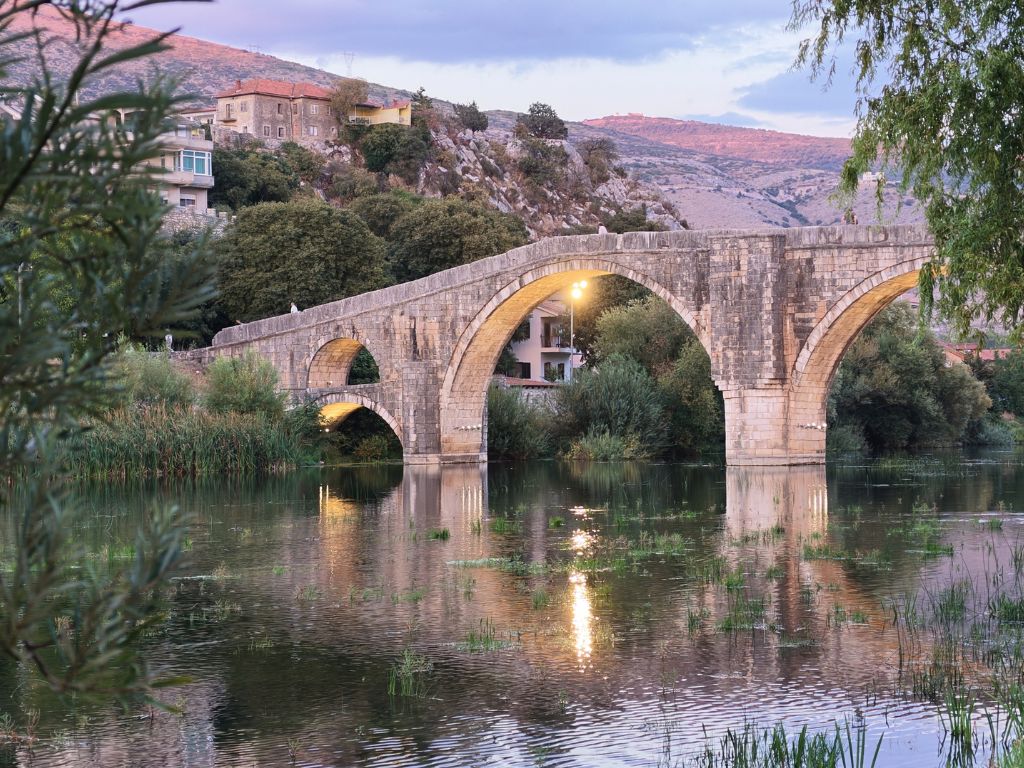
- Seven arches and eighty metres of stone beauty over the Trebišnjica.
- The only bridge in the region that was literally dismantled, moved and rebuilt stone by stone.
- The heart of Trebinje: a reason to come and a reason to come back.
Bridges are meant to join riverbanks. Some join centuries. The Arslanagić Bridge is one of those, and its story is not just about stone and arches but about the stubbornness of a Herzegovinian gem that was attacked, mined, flooded, taken apart stone by stone and turned down by buyers from around the world, and still stands. Here, in Trebinje. Because it was not for sale.
Perović (Arslanagić) Bridge: two names, two eras, one story
The bridge was built in 1574 as an endowment of Mehmed Pasha Sokolović, one of the most powerful grand viziers of the Ottoman Empire, in honour of his son who was killed fighting the Venetians. Eighty metres long, with seven arches spanning the Trebišnjica, it ranks among the most important examples of Ottoman bridge building in the Balkans and is the most notable historic monument of the Turkish period in Trebinje.
Its name came not from the builder or the patron but from a toll keeper. When the Turks were driven out of Herceg Novi in 1687, many Turkish families settled in Trebinje. Among them was Arslan-aga, who received estates east of Trebinje and the right to charge a toll at this crossing. He built a house by the bridge, and a whole settlement, Arslanagići, grew up around it over time. The bridge has carried his name ever since.
But the bridge had a name before Arslan-aga. The official name used by the Trebinje Tourist Organisation is the Perović (Arslanagić) Bridge, because the older, less-known name goes back to before the Ottomans and is linked to the Perović family, a prominent Trebinje family who ruled the area before the Ottoman conquest. Two names. Two eras. One structure that remembers them all, and which originally stood ten kilometres upstream, on the road between central Bosnia and Herceg Novi, before a hydroelectric plant and one stubborn decision changed everything.
Wounded, flooded, taken apart and brought back every time
The Arslanagić Bridge has not had an easy life. In the Second World War someone tried to blow it up and destroyed its left wing. It was repaired. It seemed the hardest days were over.
But in 1965 the authorities decided to build a hydroelectric plant on exactly that spot. When the Gorica reservoir filled, the bridge went proudly under water. It stayed submerged for a year. Then the decision came to move the jewel of Trebinje to a new site.
After the lake was drained in 1966, dismantling began. The bridge was taken apart stone by stone and stored on a nearby field. Then came the most remarkable offer in its history: a concrete bid to buy it from Canada. The people of Trebinje said no. The bridge was not for sale.
Moving the stones began in 1970 and took two years. The bridge reopened at its new site in the Gradina neighbourhood, a few kilometres downstream from the original. The town got used to it. The bridge stayed. And it became a symbol.
A symbol money cannot buy
The Arslanagić Bridge is not only a historic or architectural landmark; it has character. A symbol that defies, goes under and comes back up. That is attacked and rebuilt. That is mined and repaired. And that in the end moves a few kilometres downstream and remains the reason people come to Trebinje and leave it smiling.
A Herzegovinian story full of defiance and pride: that is the shortest possible description of a bridge that survived everything history threw at it.
Taste & Rate editors’ tip
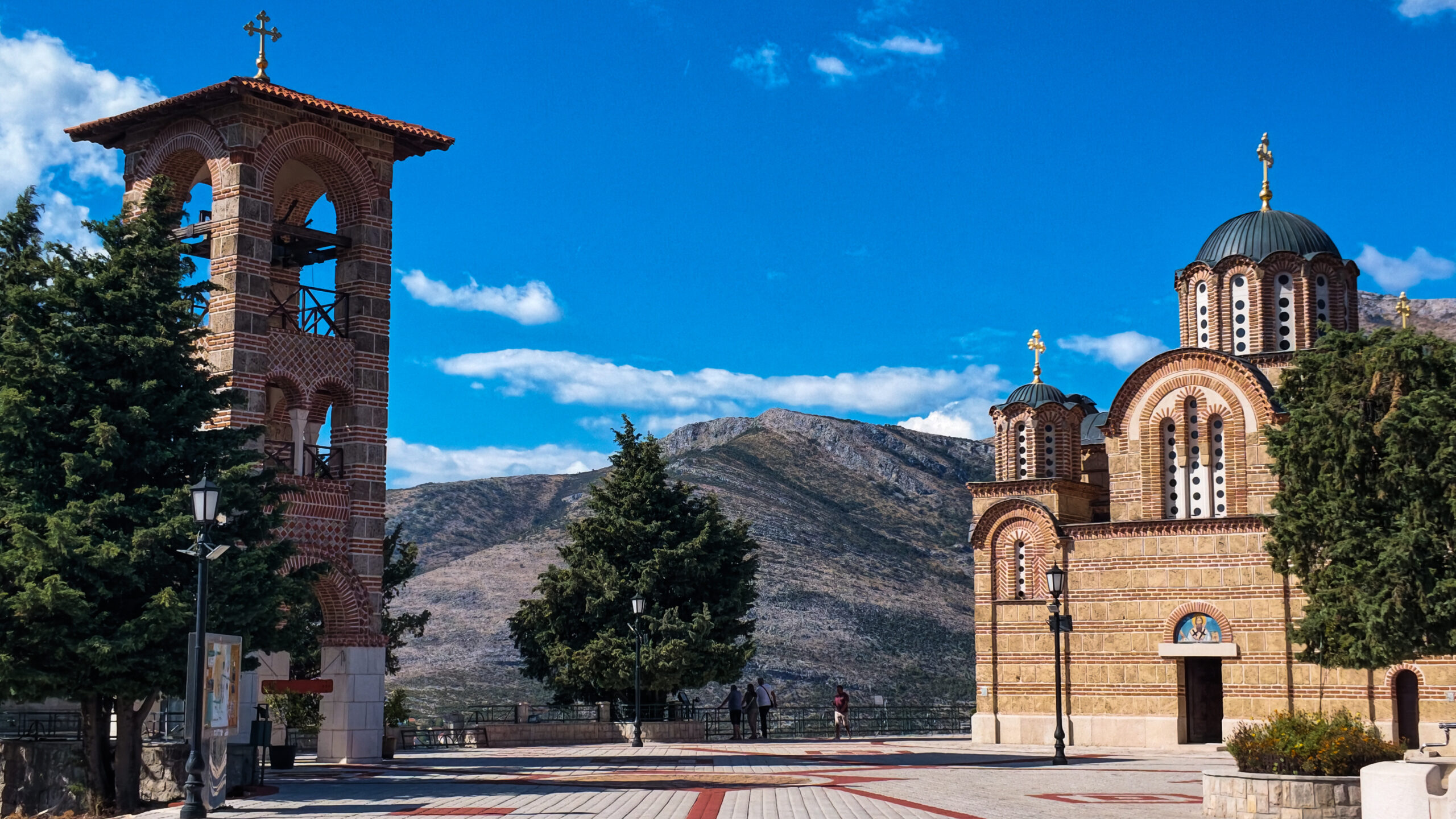
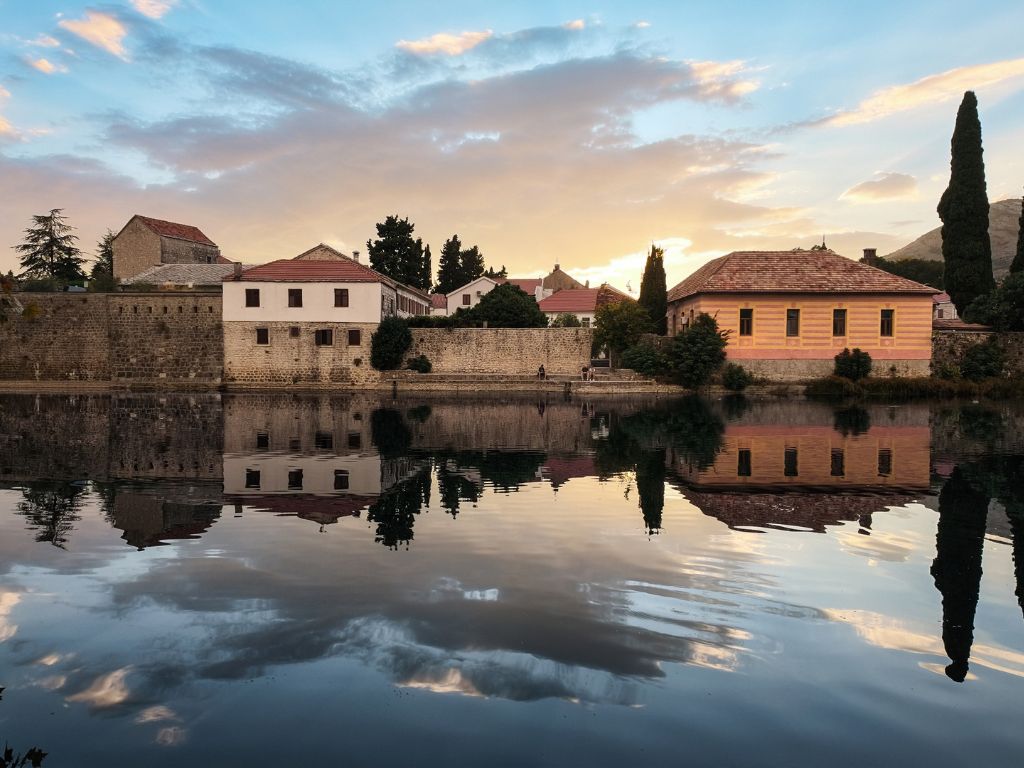
Visit the Arslanagić Bridge in the morning, when the silence along the Trebišnjica is complete, and sit on the bridge long enough to understand why Trebinje never agreed to sell it. Along with the bridge, Trebinje offers its Old Town, Tvrdoš Monastery and one of the most beautiful Mediterranean atmospheres anywhere inland in the Balkans.
Photos
Visitor reviews
No reviews for this place yet. Yours will be the first one others read.