5 reasons the Old Bridge in Mostar belongs on your list
- UNESCO World Heritage, one of the best-known symbols of Bosnia and Herzegovina and the whole Balkans.
- An engineering feat from 1566, the largest arch of its time, with not a single pier in the water.
- A story of destruction and rebuilding that says more about human strength and solidarity than about architecture.
- A centuries-old tradition of diving from the bridge, still alive in front of visitors today.
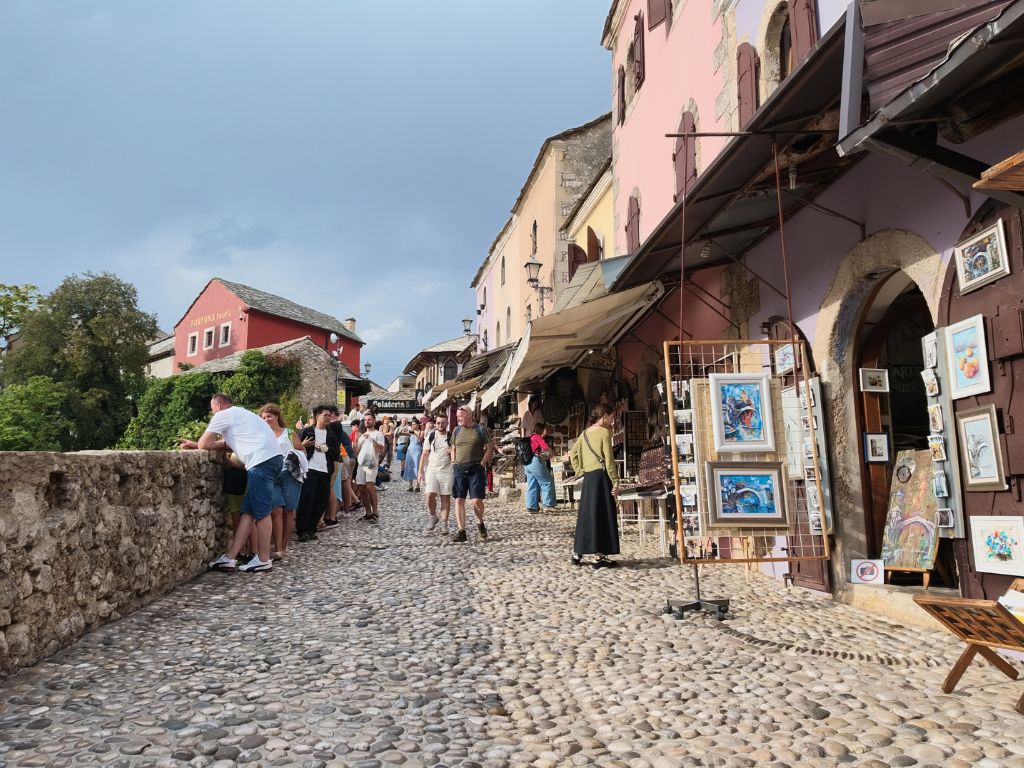
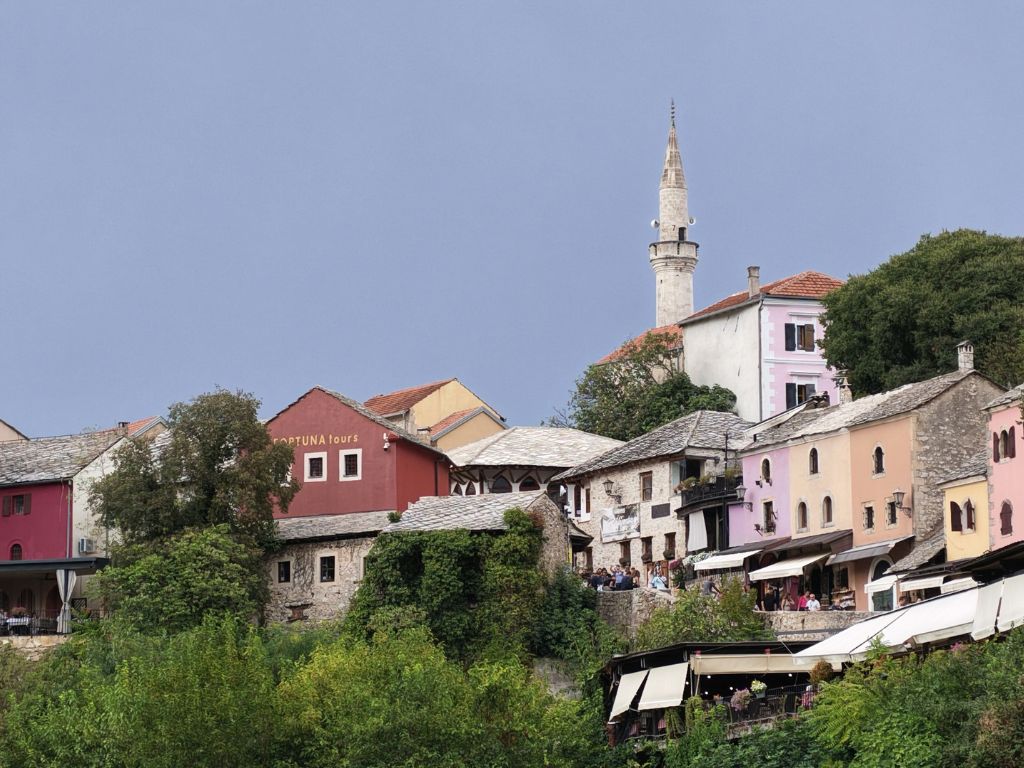
- Set in the heart of Mostar’s Old Town, surrounded by the bazaar, towers and history at every step.
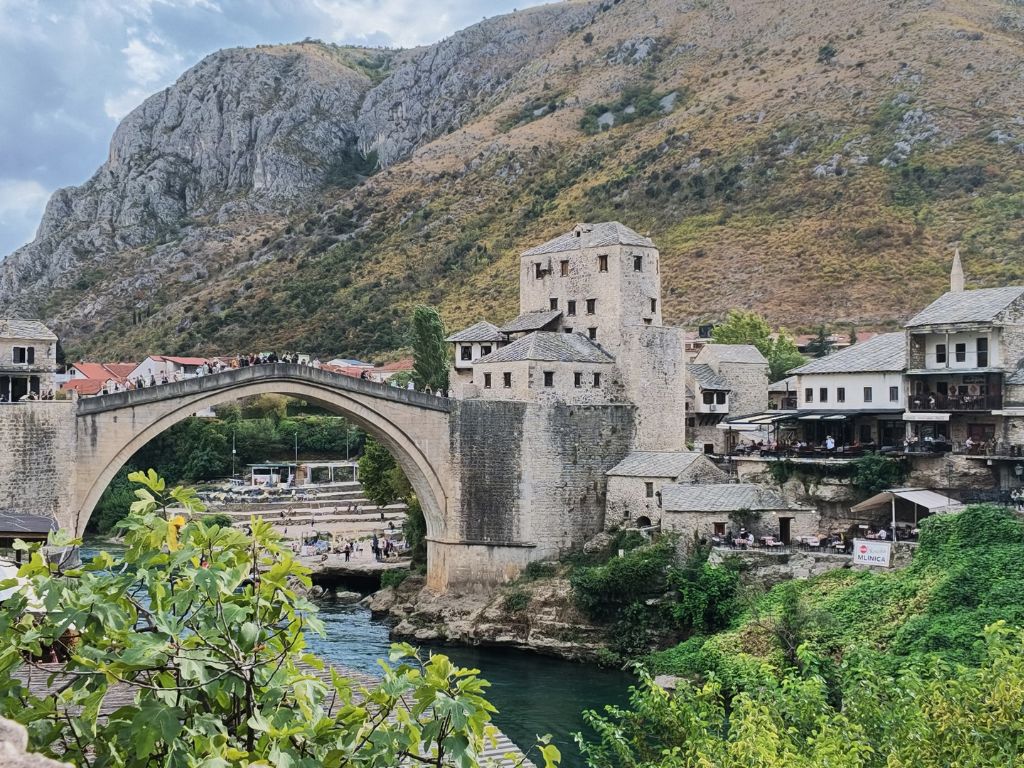
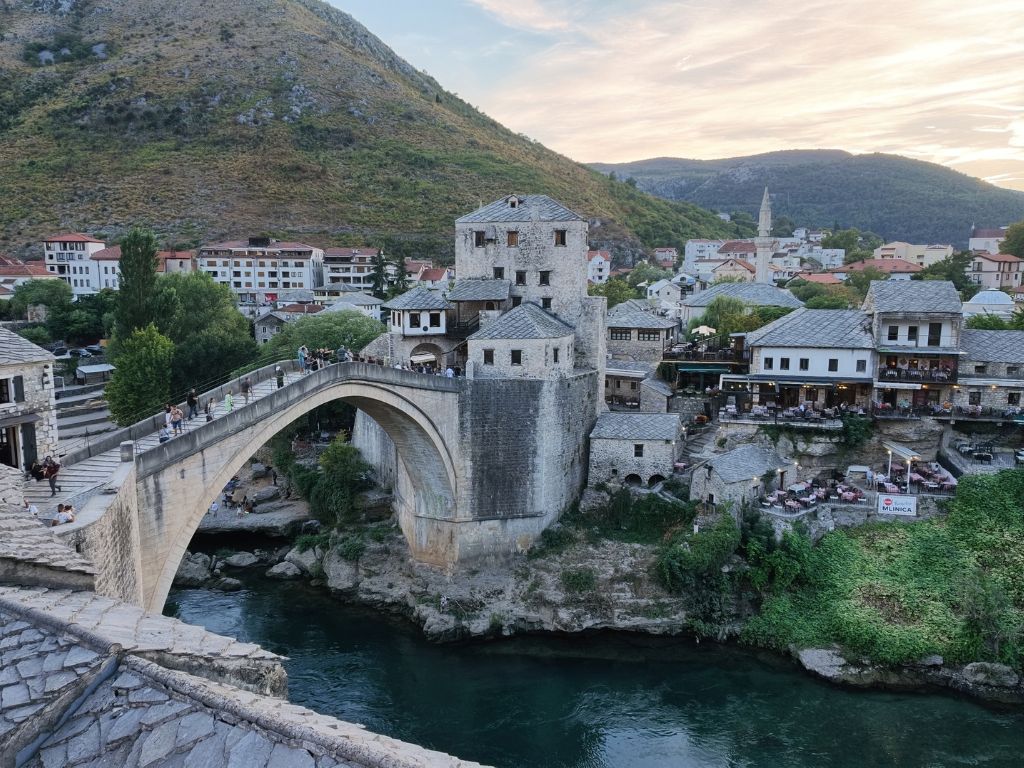
Some places are so famous that everyone knows them by name, and when you finally see them in person they still manage to surprise you. The Old Bridge in Mostar is one of them. Four metres wide, thirty metres long, an arch rising twenty-four metres above the emerald Neretva, and a story heavier than every stone it is built from.
An engineering marvel that left architects speechless
Sultan Suleiman the Magnificent commissioned the bridge between 1557 and 1566, when the Ottoman Empire was at the height of its power. Mimar Hayruddin, a pupil of the great Mimar Sinan, who built the most important buildings of Constantinople, was sent to the site. According to legend Sinan himself judged that an arch here was impossible. Hayruddin proved otherwise.
The result was a single-arch bridge with a 29-metre span, not one pier in the water and an arch only 77 centimetres thick: when it was finished it was the largest arched structure in the world. In the seventeenth century the travel writer Evliya Çelebi wrote that the bridge was a work of art that put every builder in the world in checkmate. He was not exaggerating.
Construction cost 300,000 akçe. Legend says the day the bridge was completed was also the day its builder died.
A bridge that outlived everything that tried to destroy it
Over four and a half centuries the Old Bridge survived empires, wars and the forces of nature. It even withstood the Nazi tanks that crossed it in the Second World War. But on 9 November 1993, in the conflict that devastated Mostar, the bridge fell into the Neretva. 427 years of history disappeared in a few seconds.
What followed was not just the rebuilding of a bridge but an international project that brought together UNESCO, Turkey, Italy, the Netherlands, France and the World Bank in the shared belief that some symbols must be restored. The original stone, tenelija, was cut from the same quarries Hayruddin used, with original methods and tools, by experienced masons who relearned sixteenth-century techniques.
The rebuilt bridge reopened on 23 July 2004 and the area was added to UNESCO’s World Heritage List soon after. It was more than a restoration: it was proof that beauty can outlive hatred. Café del Montenegro
Mostari: the town named after the bridge keepers
Mostar owes its name to this very bridge. The mostari were the keepers of the bridge in Ottoman times, and the town was named after them. That detail says everything about how central the bridge was to the identity of the town around it. When the bridge fell, Mostar lost part of its name. When it was rebuilt, the town got it back.
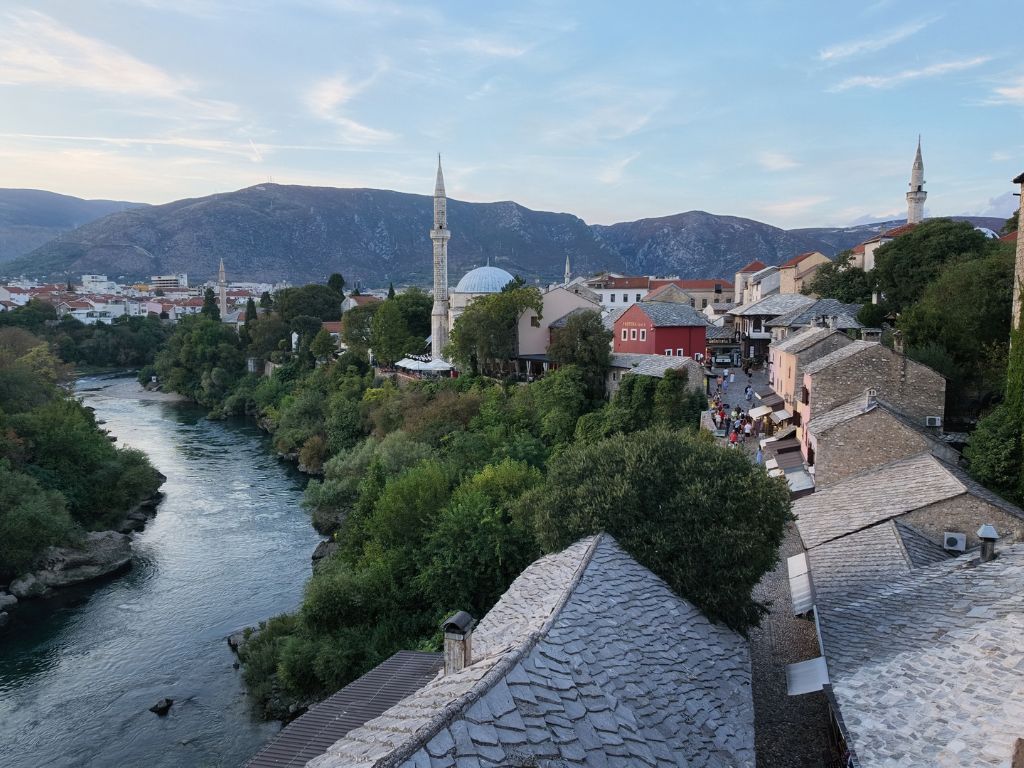
The two towers that flank the bridge, Halebija on the right bank and Tara on the left, built in the seventeenth century, still stand as silent guards that remember everything that has passed between them.
The bridge divers: a tradition that lasts for centuries
One sight that fascinates visitors as much as the architecture is diving from the bridge, a tradition as old as the bridge itself. Leaping twenty-four metres into the cold Neretva was a rite of passage for young men of Mostar, a test of courage handed down from generation to generation. Today it is both a tourist attraction and a sport, but anyone who watches a diver standing on the edge of the stone arch, getting ready to jump, understands that something of the original ritual is still alive.
Taste & Rate editors’ tip
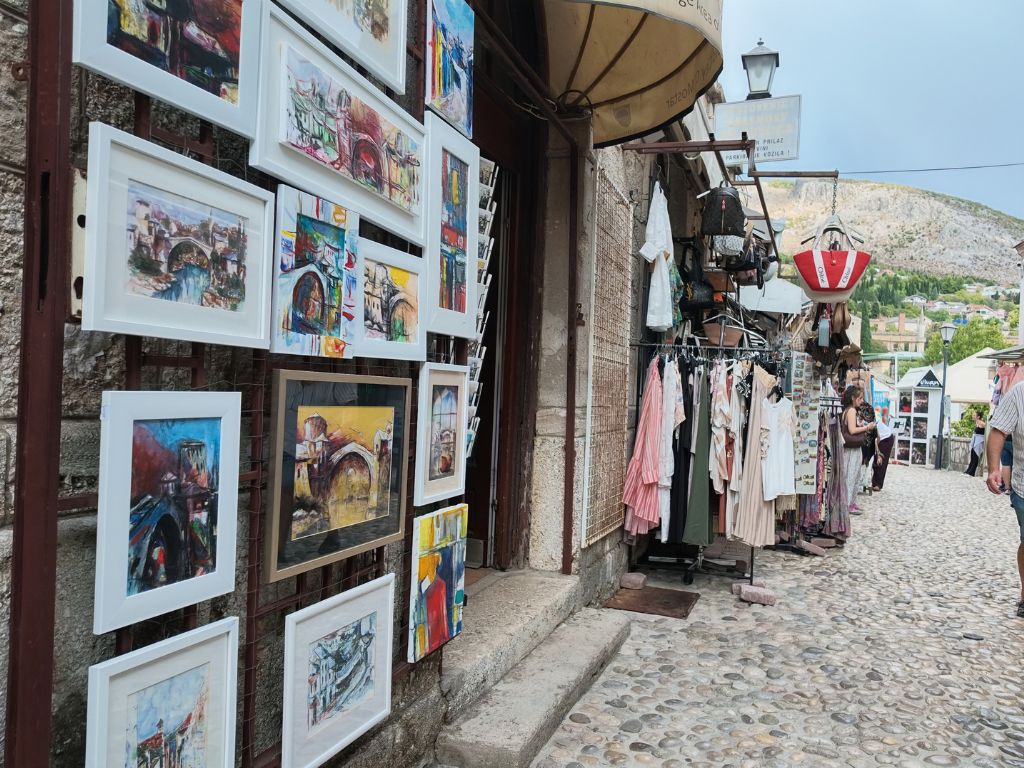
Visit the Old Bridge at dusk, when golden light falls on the white tenelija stone and the Neretva below turns the colour of copper. It is a moment that makes every photo you have seen feel inadequate. The Old Town around the bridge offers the bazaar, small shops, restaurants and a story on every corner: allow at least half a day and do not hurry. The bridge is open to cross every day, and the Old Bridge area of Mostar has been on UNESCO’s World Heritage List since 2005.
Photos
What to expect
- Free Wi-Fi
Visitor reviews
No reviews for this place yet. Yours will be the first one others read.