
Twenty-five kilometres south of Banja Luka, in the Krupa valley between the Zvečaj and Greben gorges, lies a place no photograph can quite capture. Krupa na Vrbasu is one of those rare outings where nature, history and silence hit you all at once: as soon as you turn off the main road towards Jajce and hear the roar of water growing with every step, you understand why this small place has drawn people for centuries. It is no exaggeration to call Krupa the most beautiful natural attraction close to Banja Luka, and the city’s tourist board sees it as the centre of adventure activities on the middle course of the Vrbas.
Waterfalls and mills, the heart of Krupa
The main attraction, and the reason most people come the first time, is the cascade of the Krupa river about a kilometre upstream from where it meets the Vrbas. Several large falls stretch along roughly a hundred metres of river, and their sound, powerful and unmistakable, reaches you long before you see them. Beside the falls stand water mills, some still working, grinding flour from wheat, barley, rye, maize and buckwheat. Visitors rarely leave empty-handed: a kilo of freshly milled flour is a natural souvenir, and in summer the millers also sell hot buckwheat fritters with kajmak, which have become the unofficial symbol of the place.
The river has its own origin story. It rises below Mount Dimitor in the Podrašnica field near Mrkonjić Grad under the name Ponor, disappears underground and re-emerges at Krupa na Vrbasu, as if that underground journey were a passage through an invisible purgatory from which it comes out clear, clean and full of strength. It is full of trout you can see with the naked eye, and fishing is forbidden, which is exactly why the fish here are so relaxed and easy to watch.
The walk to the spring, three kilometres you should not skip
From the waterfalls a marked trail leads to the source of the Krupa: about three kilometres of easy walking through forest and meadows and past village homesteads. The path is marked all the way and suitable for everyone, from children to older visitors. Along the way you pass through a hollow rock, see a tree growing out of stone, may spot the gnawed trunks left by beavers along the bank, and cross small footbridges that make the walk lively and a little adventurous. It looks short on the map and stays with you for a long time.
The Monastery of St Elijah, an endowment from the Nemanjić era
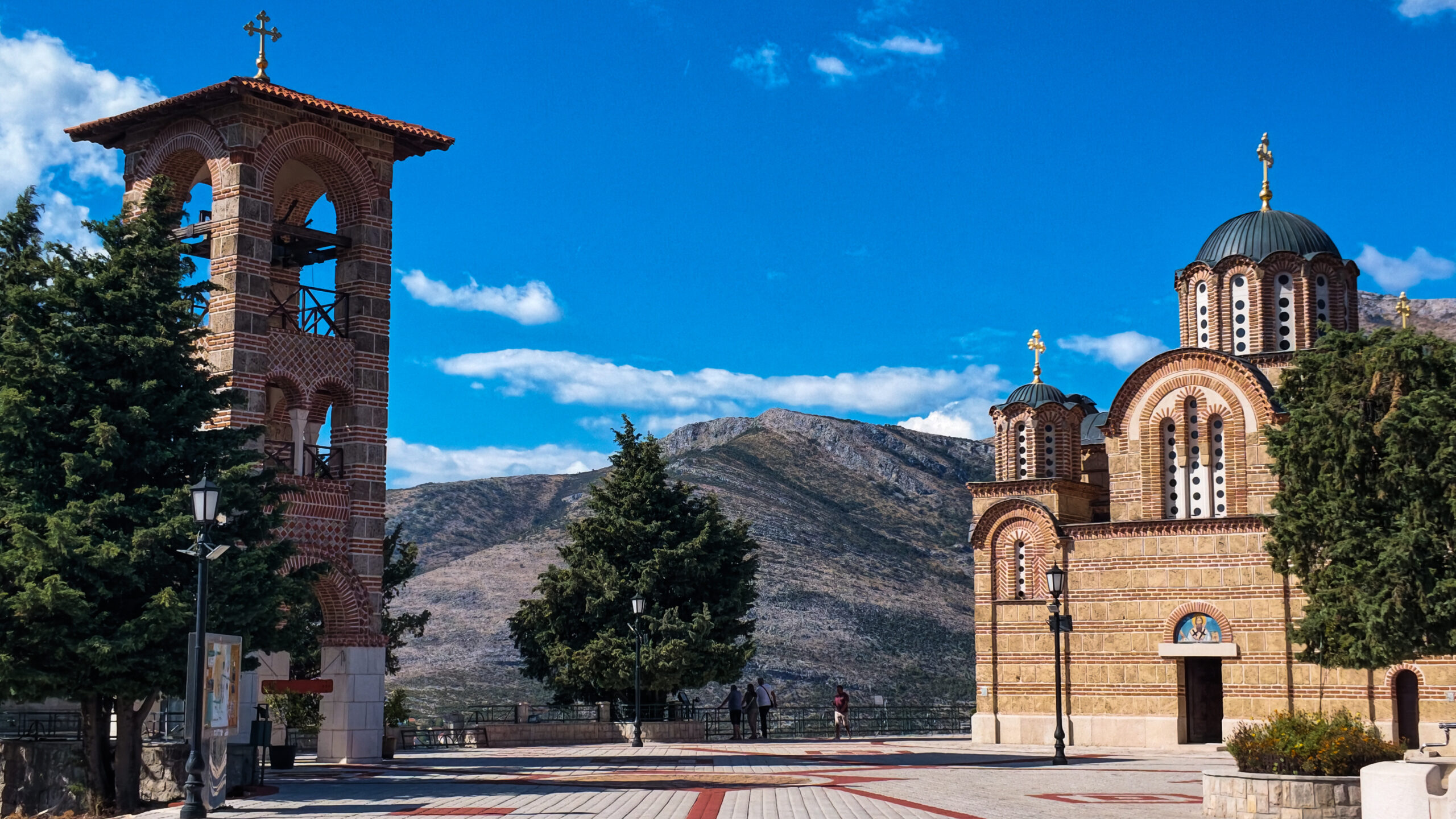
About fifteen minutes on foot from the waterfalls along a forest path, or a short drive by the road, is the Krupa na Vrbasu monastery with the Church of St Elijah, one of the most important religious buildings in the Banja Luka area. It was built on the foundations of an even older monastery thought to date from the Nemanjić period, the late 13th and early 14th century. The church measures about 24 by 12 metres, is built of rubble stone, and has a wooden ceiling and a carved iconostasis that takes your breath away. The complex includes a necropolis of stećci, medieval tombstones protected as cultural heritage. The monastery shop sells items decorated with Zmijanje embroidery, one of the most recognisable handicraft motifs of Republika Srpska.
The Stone Bridge and Greben fortress, for those who want more
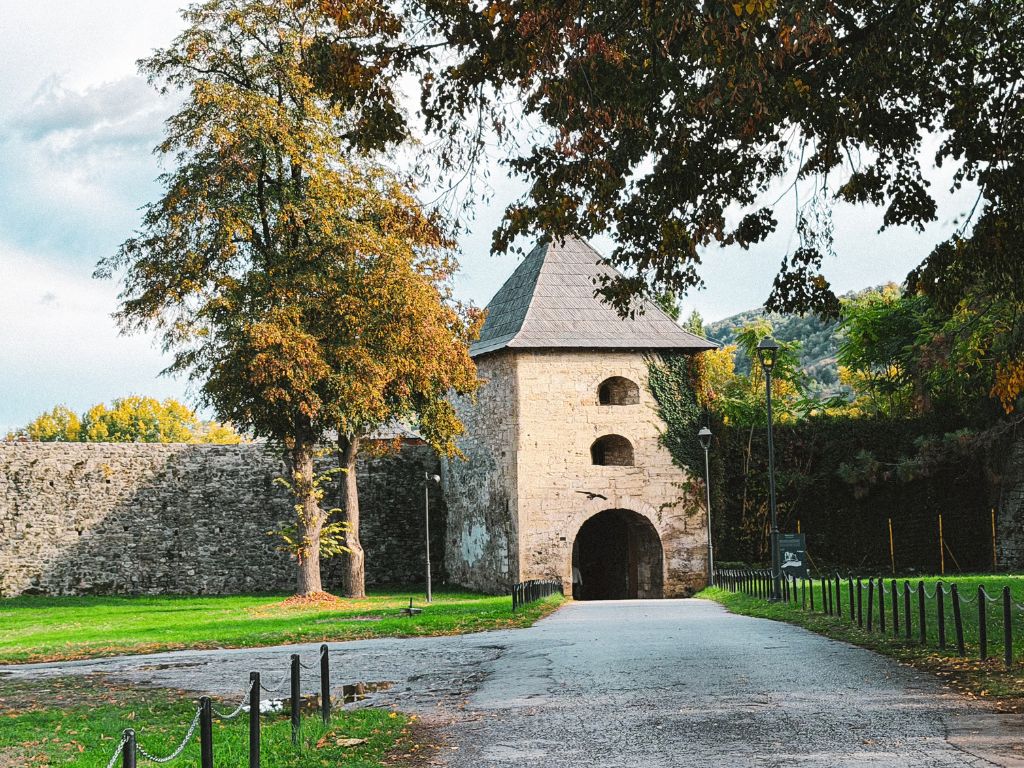
Two kilometres from Krupa, visible from the main road, stands the Stone Bridge, a natural arch created over thousands of years by wind erosion. Legend tells a different story: a girl climbed the rock out of unrequited love, which is why it is also called the Maiden’s Bridge. It is one of the best-equipped climbing spots near Banja Luka, with 51 routes, and you reach it by crossing a suspension bridge over the Vrbas, which is an attraction in itself. Above the monastery, on a hill, are the medieval ruins of Greben fortress from the 12th century, once a strategic stronghold controlling the Vrbas canyon and today a viewpoint that rewards every step of the climb.
What else Krupa na Vrbasu offers
Krupa is not only for looking at. By the waterfalls there are picnic areas and a riverside campsite, the Krmine paragliding take-off, a starting point for rafting on the Vrbas, three fish ponds, sports grounds and cycling trails. The “Kočić’s Trails” hiking path starts at the Stone Bridge and leads to Gomionica monastery. The Krupski slapovi and Pastir restaurants serve local food right by the falls: grilled trout tastes different here, and so do the buckwheat fritters with homemade kajmak, especially when eaten on the little footbridge facing the falls.
Taste & Rate editors’ tip
Give Krupa a whole day rather than an hour. Start at the waterfalls, walk to the spring, sit on the grass by the river, visit the monastery and end the day with trout in a restaurant by the quiet water. In 2023 Krupa na Vrbasu was named one of the Best Tourism Villages in the world, and that was no accident. It is easiest to come by car; parking by the falls is free, and the Banja Luka–Jajce main road runs right through the village.
Photos


Visitor reviews
No reviews for this place yet. Yours will be the first one others read.