5 reasons to visit Tvrdoš Monastery
- One of the oldest cultural and historical monuments in Republika Srpska, with foundations from the 4th century.
- The place where St Basil of Ostrog took his monastic vows, a spiritual history you can feel.
- A 15th-century wine cellar and a tradition interrupted for three hundred years and revived in 1999.
- Tvrdoš Vranac and Žilavka, drunk in sixteen countries and awarded at international competitions.
- A glass floor showing the old church beneath: history literally under your feet.
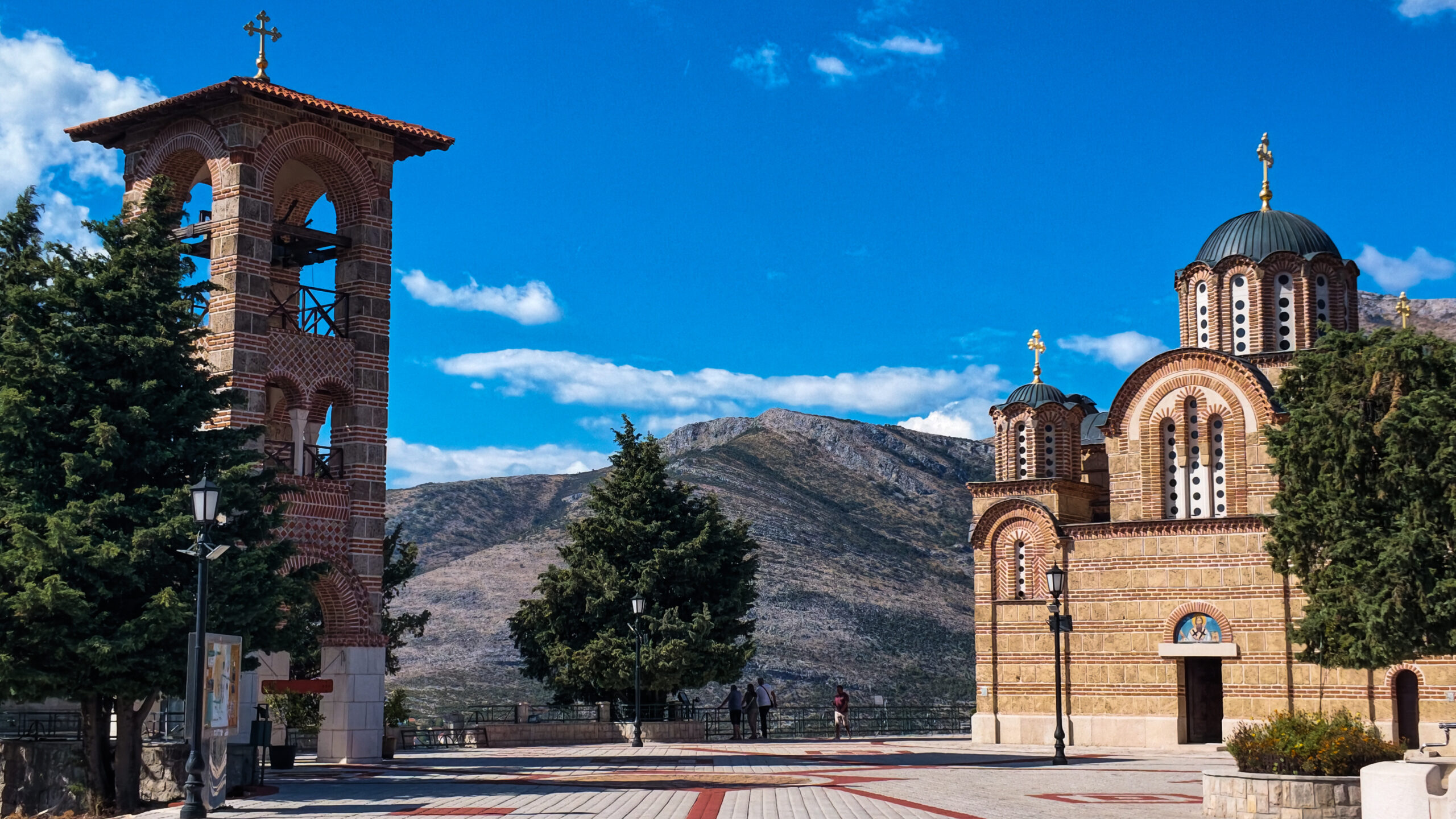
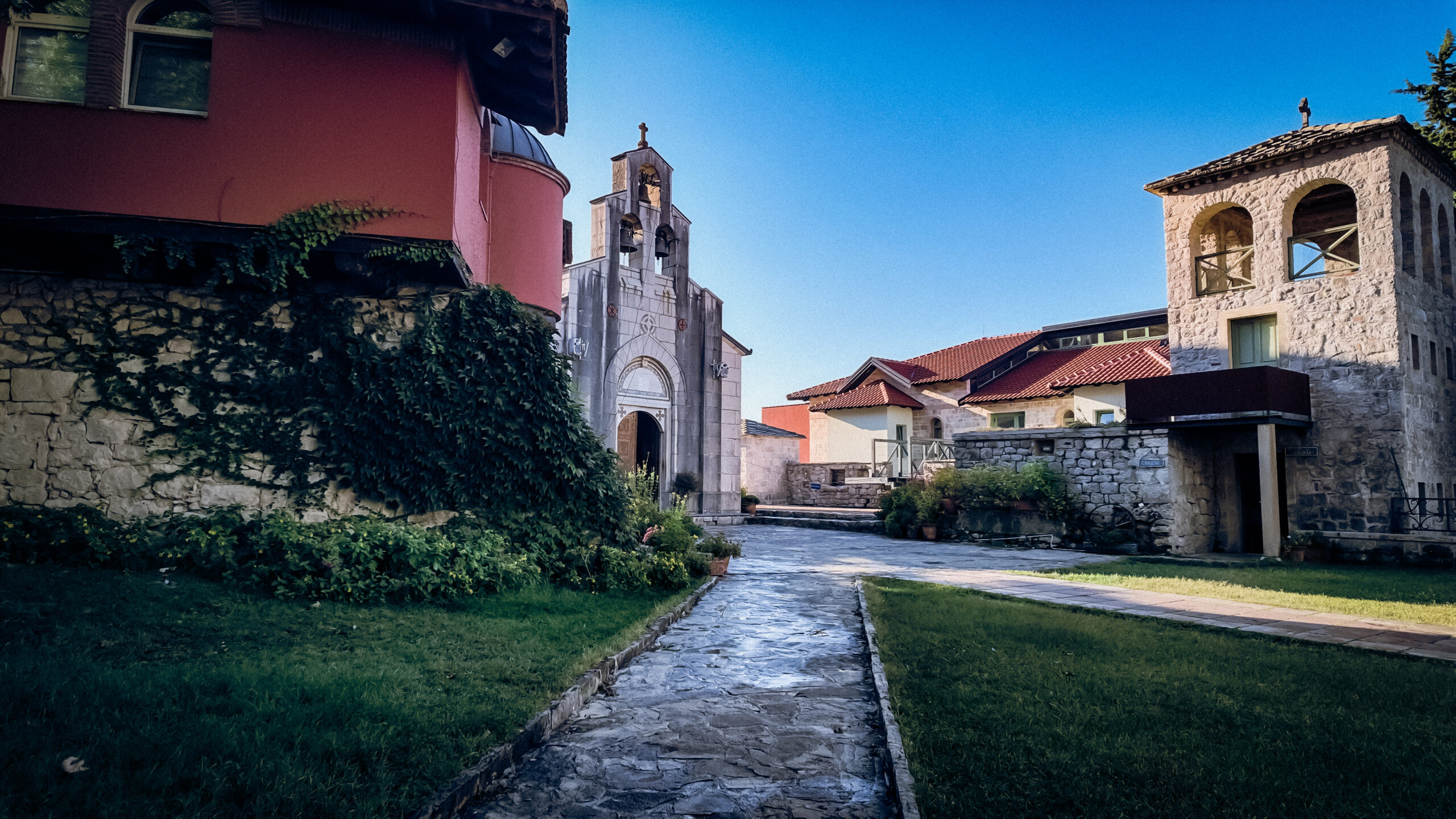
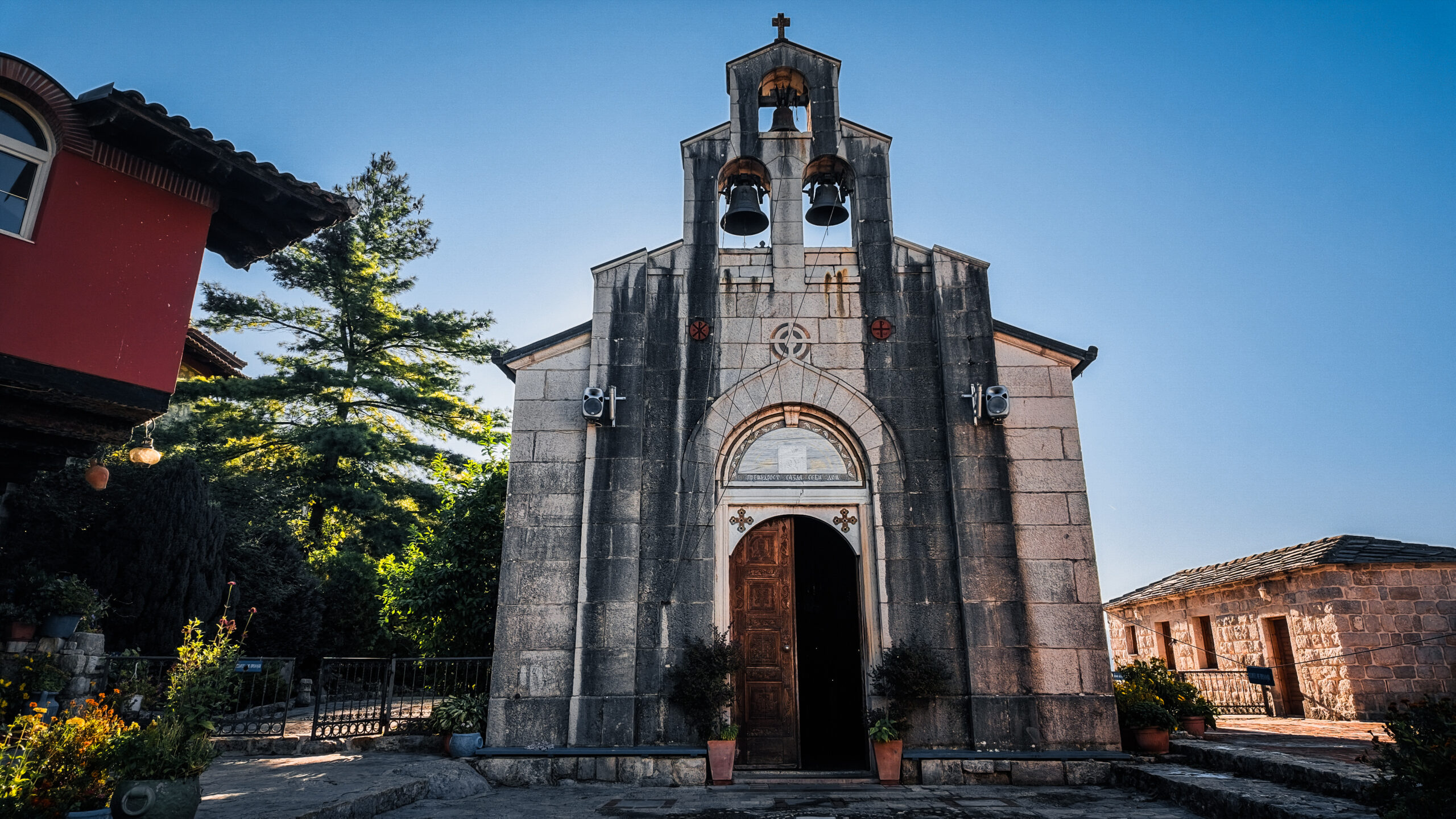
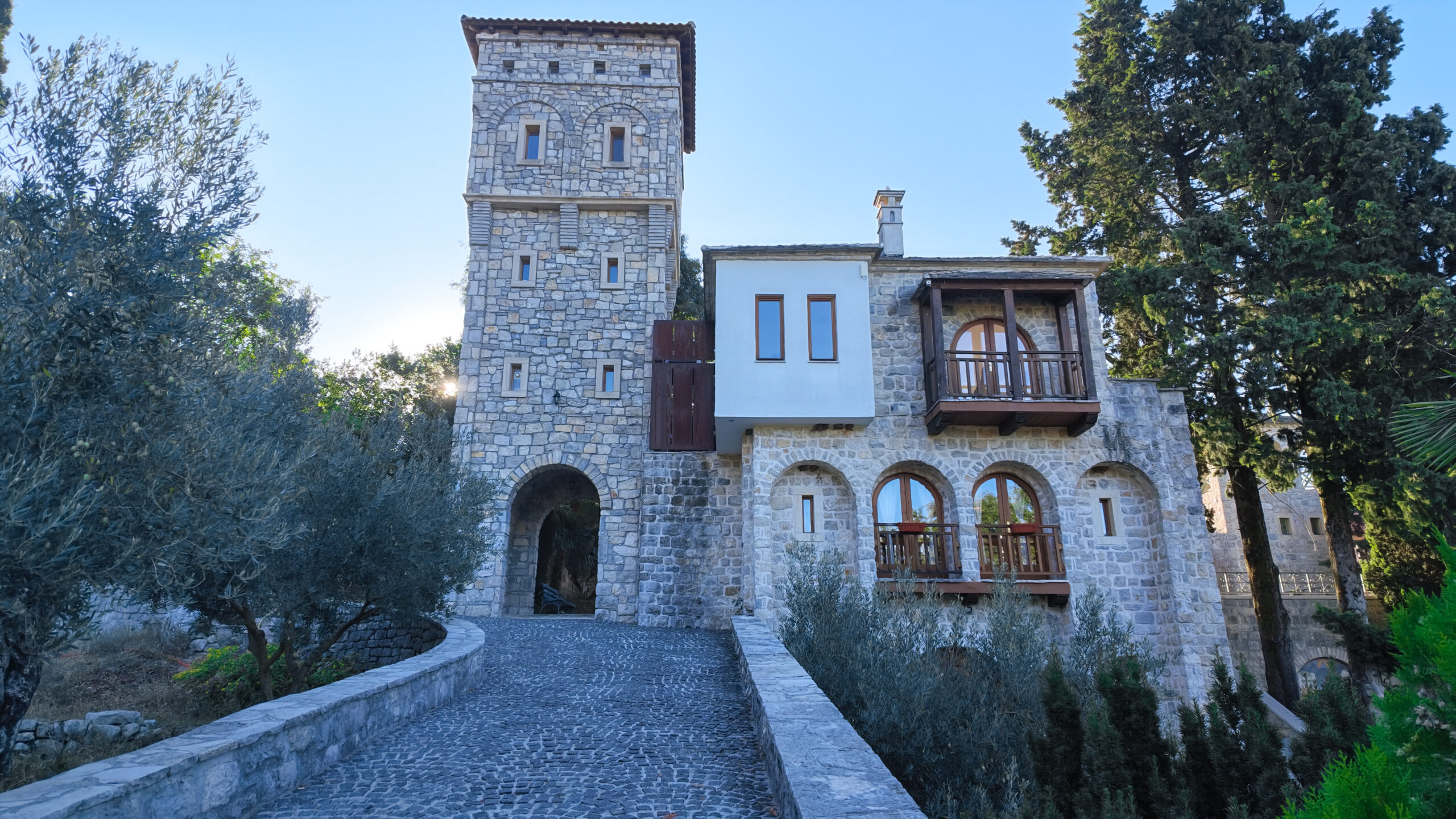
Five kilometres west of Trebinje, on the right bank of the Trebišnjica, stands a monastery older than every border that has ever crossed this region. Tvrdoš was built on the foundations of a 4th-century church from the time of Emperor Constantine and his mother Helena, and since then it has been destroyed, rebuilt, abandoned and brought back to life so many times that its history reads like a story in which every era has its own drama.
Today Tvrdoš is a living monastic community, one of the most visited religious and cultural destinations in Republika Srpska and, to most visitors’ surprise, home to one of the most interesting monastery wineries in the region.
Where St Basil of Ostrog became a monk
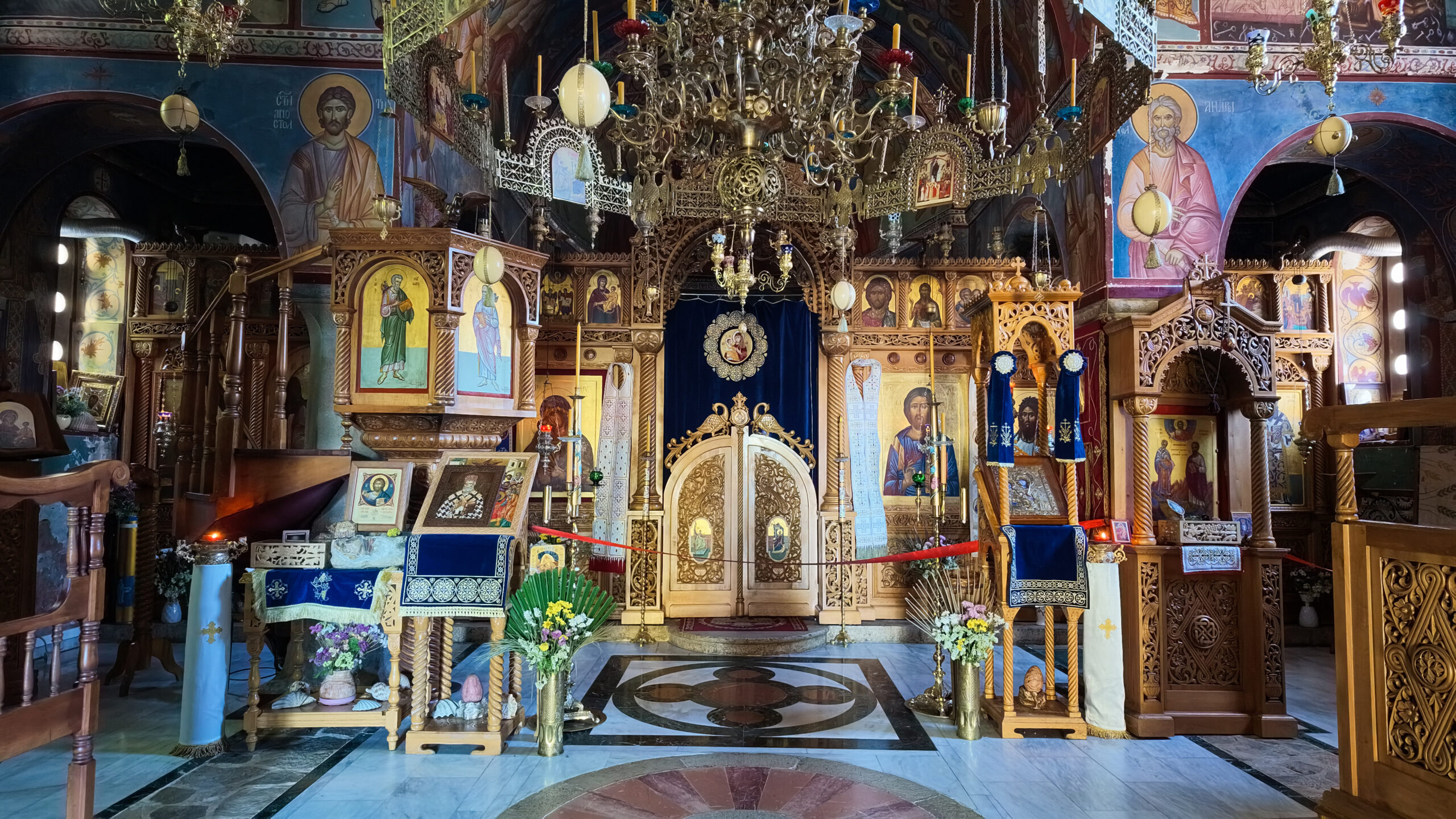
Tvrdoš is more than stone walls and an iconostasis; events that shaped the Orthodox spiritual history of the region happened here. It was here that St Basil of Ostrog took monastic vows and was ordained a priest, after which he served for a time as parish priest of Popovo Polje. Because of that link he is also called “of Ostrog and Tvrdoš”, which gives the monastery a spiritual weight you sense on your first visit.
In the 16th century, when the monastery was the seat of the metropolitanate of Hum and Herzegovina (later Trebinje), it also housed the largest scriptorium of the South Slavs, a centre where books were copied and knowledge preserved at a time when a people’s whole cultural identity depended on it. Frescoes by the Dubrovnik painter Vicko Lovrov and the monk Marko Stefanović of Trebinje decorate the church as quiet witnesses to that golden age.
A 15th-century cellar and wine that travels to sixteen countries
What lifts Tvrdoš beyond “a monastery you visit” is a cellar that people in nearby villages long thought was a cave. Buried and forgotten, it kept the secret of the monastery’s 16th-century wine tradition until the monks began to dig and uncover what was waiting.
The monastery’s 16th-century chronicle records that it made wine and that its storerooms and cellars were full of it. After a three-hundred-year break the tradition was revived in 1999: a new cellar was built and the old one excavated and cleaned.
Today Tvrdoš has two cellars that tell two completely different stories. In the old stone cellar from the 15th century, Vranac matures in century-old oak barrels in a traditional way unchanged for centuries. Barely ten metres away, by the Trebišnjica, a new cellar equipped with the latest technology is set into the ground, blending so well into the stone complex that neither story drowns out the other.
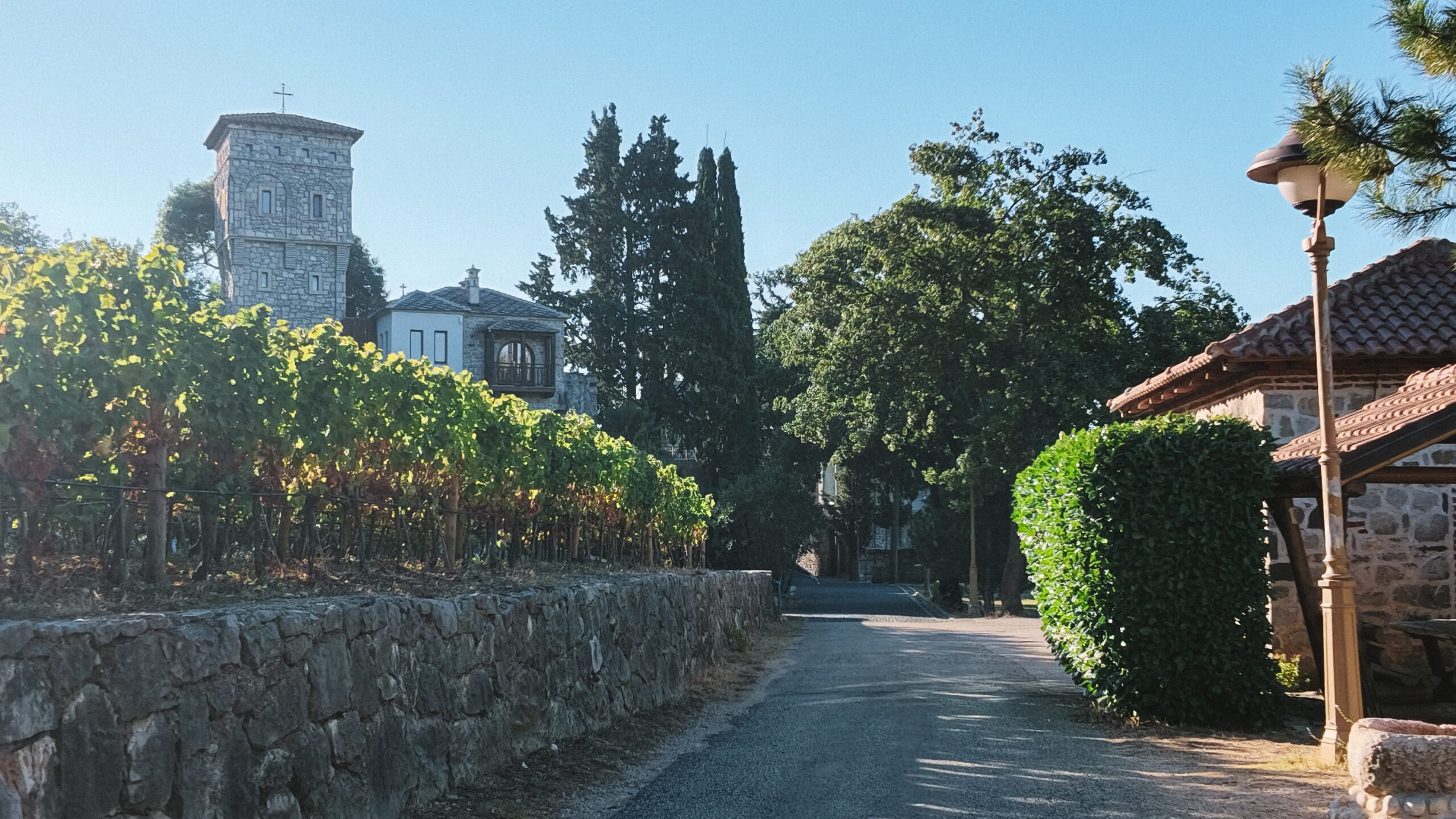
The monks have taken over vineyards in the Trebinje field, where old Vranac plantings cover seventy hectares, and planted sixty hectares of young vineyards in Popovo Polje. Tvrdoš Vranac, Žilavka, Chardonnay and Cabernet Sauvignon are now drunk in sixteen countries, and at the New Paltz Wine and Food Festival in New York the monastery cellars received recognition for top quality, not a typical result for a monastery winery from Bosnia and Herzegovina.
A glass floor and a centuries-old secret
One detail that most often surprises visitors is the glass floor through which you can see the old church below, excavated and confirmed as an authentic remnant of the earliest period of the monastery’s history. The wine cellar beneath the refectory, a feature of Mount Athos building tradition, shows how Tvrdoš was part of a wider Orthodox monastic world that passed on knowledge not only through books but through architecture.
Olive groves and a growing future
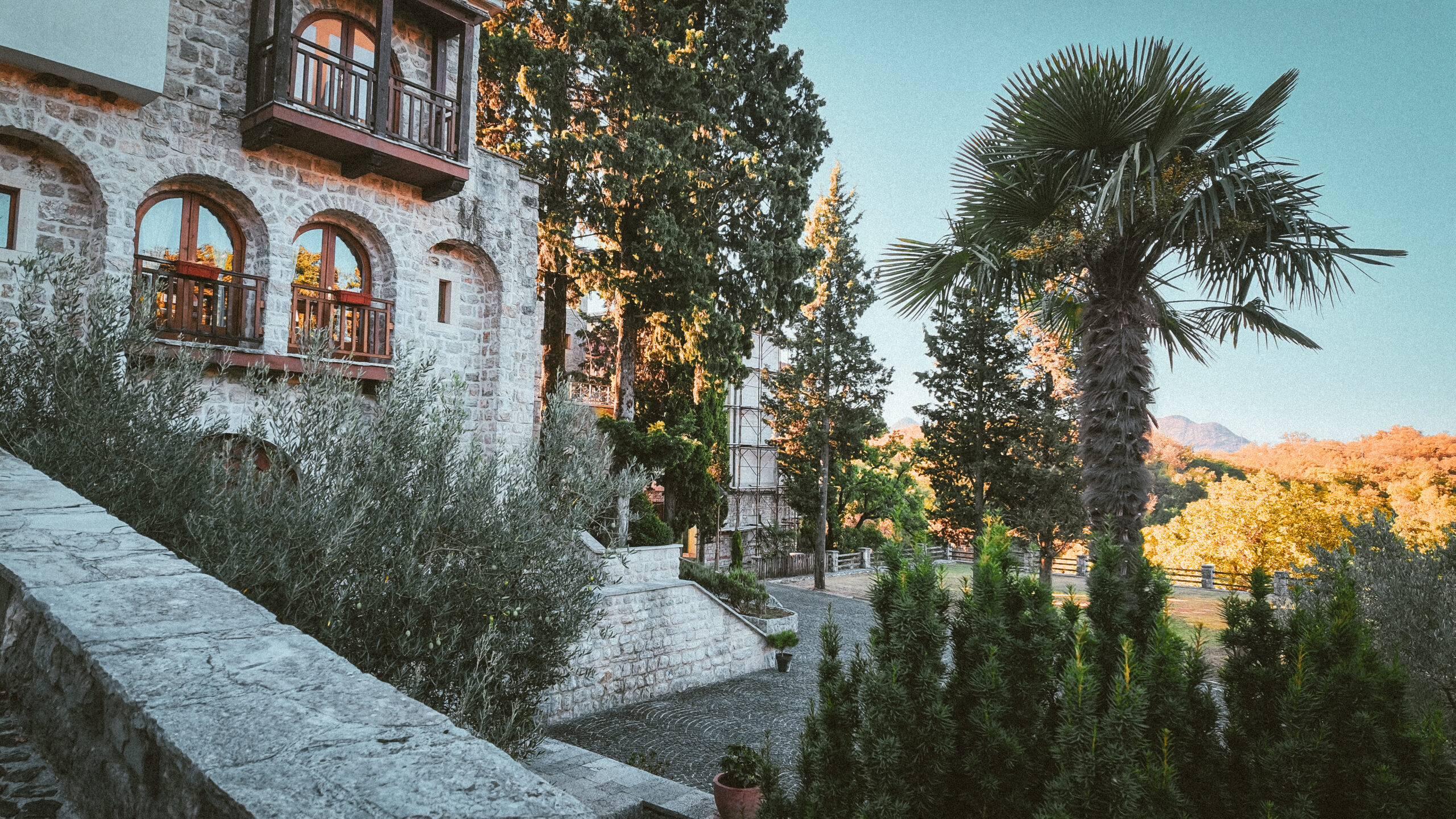
The monks have not stopped at wine. In recent years they have also started producing olive oil, making Tvrdoš a living estate that keeps developing rather than a museum piece. An active community of monks, living wine and olive traditions and constant work on restoring and developing the complex make it a place worth seeing on the first visit and the tenth.
Taste & Rate editors’ tip
Visit Tvrdoš in the morning, when the silence by the Trebišnjica is complete and the complex has that special light that does not last long. Ask the monks for a tasting of Tvrdoš Vranac in the old cellar: it is an experience no restaurant in Trebinje can replace, because it shows you centuries of charm. The monastery is on the road between Trebinje and Ljubinje, five kilometres from the town centre, on the right bank of the Trebišnjica.
Photos
Visitor reviews
No reviews for this place yet. Yours will be the first one others read.